
A tale of two birds - the Andean and California condor
Andean condors are one the largest birds in the world that are able to fly. Because they are so heavy their enormous 3 metre wingspan needs some help to keep them aloft. For that reason, these birds prefer to live in windy areas where they can glide on air currents with little effort. Andean condors are found in mountainous regions, as their name suggests, but also live near coasts where there are ocean breezes and even deserts that feature strong thermal air currents (National Geographic).
The California condor is the largest flying bird in North America. Its wings may stretch nearly 3 metres from tip to tip. When in flight, this huge bird glides on air currents to soar as high as 4500 metres. The birds now only live in a fraction of the range they once occupied, perhaps because of the loss of the great prehistoric herds that formerly roamed the continent before Europeans arrived. Condors can now primarily be found in central southern California deserts, where they roost on rocky cliffs. There are also populations in Arizona, Utah, and Mexico (National Geographic).
While these birds share similar characteristics, there is one major difference between them. California condors are listed as critically endangered by the IUCN, while the Andean condor is fearing a lot better and is listed as near threatened by the IUCN.
So what is causing the decline of the California condor? California condors have been in decline about as long as European settlements began to spread across North America. Lead poisoning was a major cause. Condors were accidentally ingesting fragments of lead-based ammunition as they scavenged on carcasses of hunted animals. Condors are also effected by pesticides, which thins their already-fragile egg shells, as well as illegal egg collection.
Beginning from 1980, California launched a major conservation campaign to bring these birds back from the edge of extinction, with only 10 birds left in the wild at the time. The captive breeding program was quite successful. By the year 2000, the population had grown to 161 condors. Currently the numbers have risen to around 300 animals.
While the Andean condor is doing better than the California condor, its numbers are still in decline and there are various conservation projects to help bring back the numbers. As with many raptor species, these birds are shot and poisoned, or some die due to a changing landscape and a lack of adequate food. In some countries, people capture condors for their rituals (Peregrine Fund).
While it is imperative that birds like the California condor that are close to extinction need help, there are also other species such as the Andean condor which appear to be doing well, but on a closer look it can be found that their numbers are declining. It is also important to step in and help before they get to the state that they are almost extinct.
I was fortunate enough to visit one such Andean Condor conservation project in Ecuador. The project was located at Hacienda Zuleta, just north of Quito. They had several captive condors which had been injured in some way and were been looked after, with the aim to eventually to release them back into the wild.
Our job was to observe their behavior to see how they were handling been in the cages. It was amazing been able to get so close to these majestic birds. The wild condors would also come and visit which is shown in the picture below.
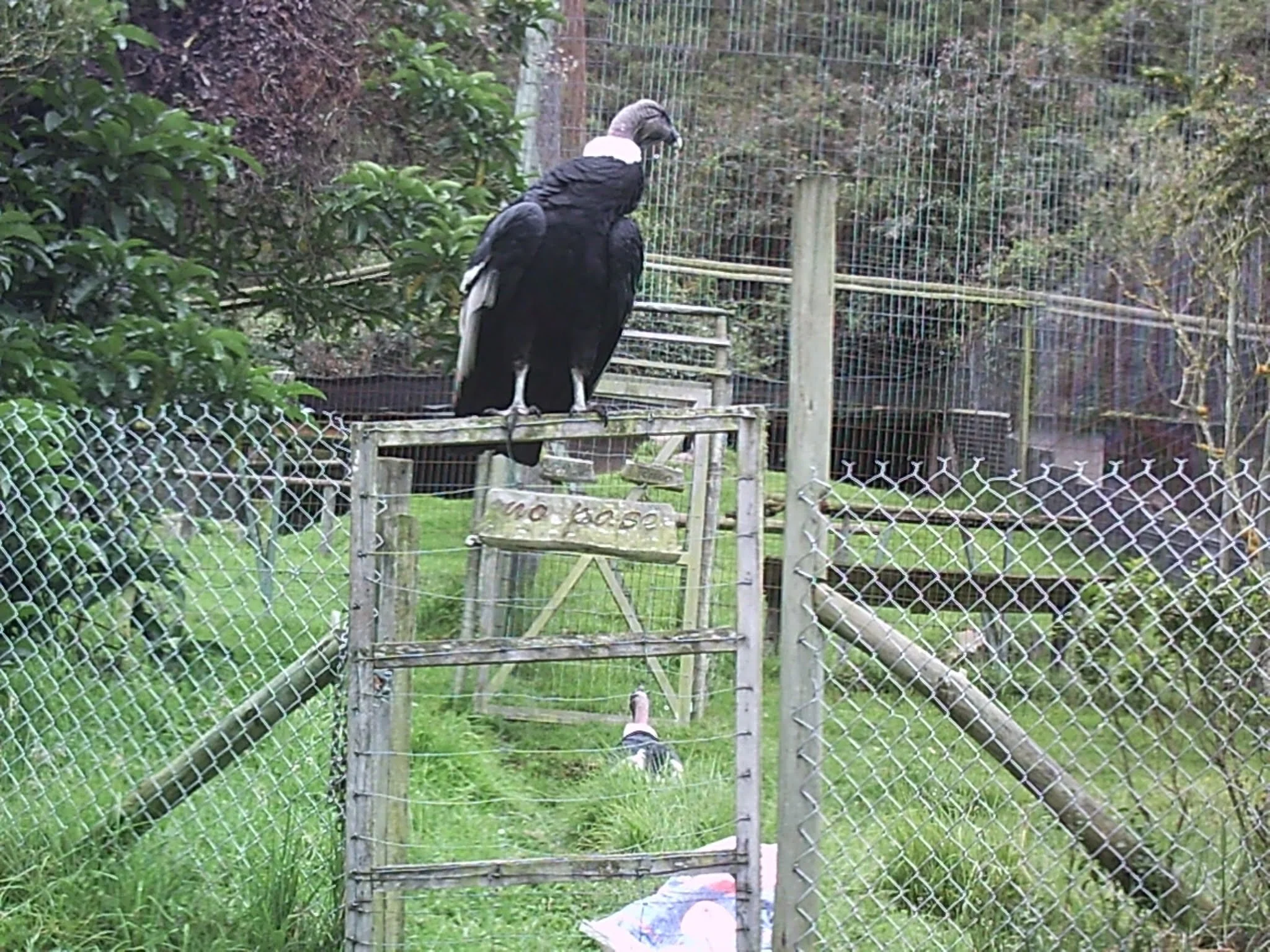
Andean condor