
Sustainable alternatives to lawn
Since the 1950’s lawn has been a common feature of Australian gardens. Perhaps this popularity is due to the neat look of a freshly mown lawn provides, as well as the ability to play sport on it. However, there are many benefits to not having a lawn. Even if you are not a huge eco warrior, not having a lawn means less mowing and less costs in having to maintain a lush and healthy lawn. From an environmental perspective not having lawn means providing habitat for insects and birds.
There are few low-cost options to consider if you want to go down the no lawn route.
Native violets
The native violet (Viola headracea) is a pretty ground cover with mauve and white flowers. It is perfect for shady areas such as under trees. It also works well in between pavers.

Native violets growing between pavers
Kidney Weed
Kidney weed (Dichondra repens) despite its name is not actually a week but a native ground cover which derives its names from its kidney shaped leaves is another native plant which makes a great lawn alternative for shady areas. It is tough enough to walk on without damaging the plant and it rarely needs to be mown. To install a lawn of Dichondra simply plant the Lawn Plugs at 30cm centres, fertilize, water well to establish.
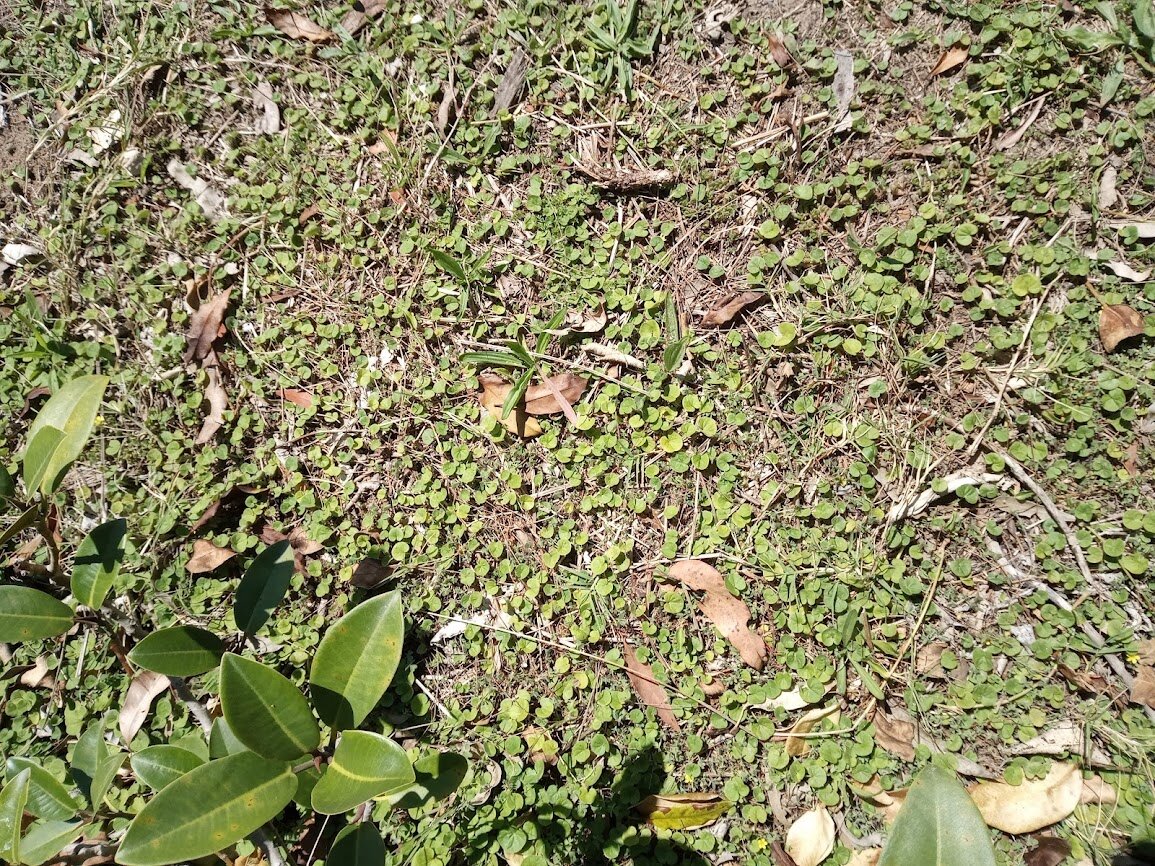
Kidney weed
Pigface
Pigface (Carpobrotus glaucescens) is a groundcover with fleshy leaves and pink flowers. It’s natural habitat is coastal sand dunes and rocks near the sea, so it is good for coastal gardens or exposed areas that require a hardy plant such as nature strips.
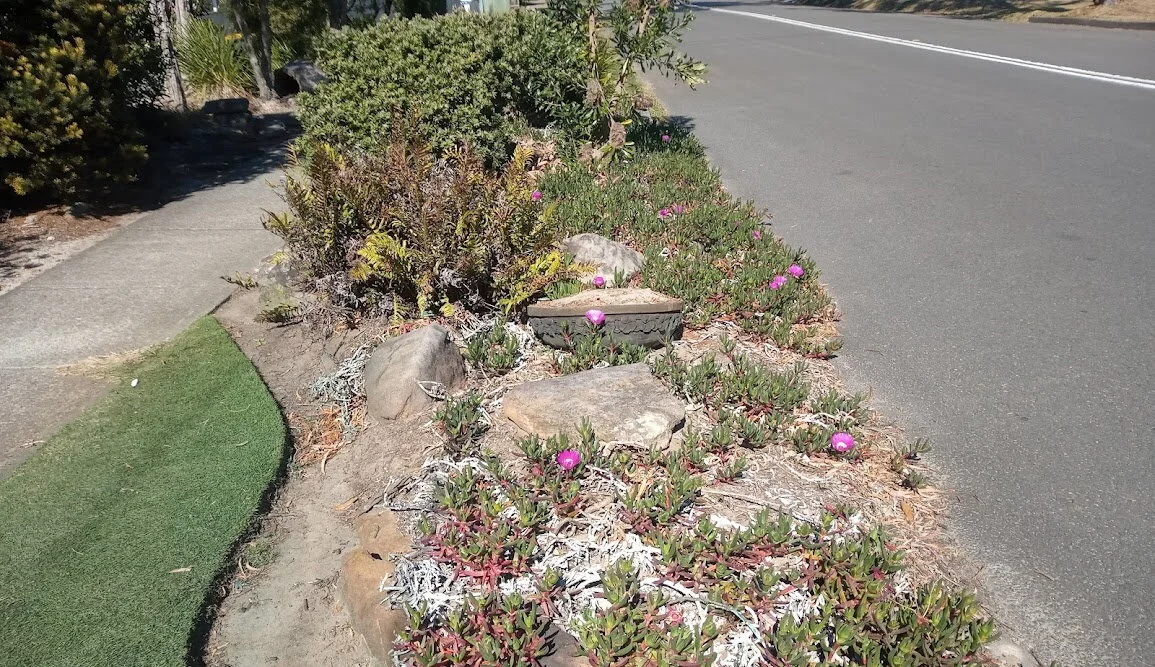
Pigface growing along nature strip (the plant with pink flowers)
Native grasses
Naturally adapted to the Australian climate and soil conditions, Australian native grasses can provide a great alternative to lawn. Native grasses are hardy and are suitable to a range of different environments. With the right species selection, a native lawn can provide low maintenance, permanent cover all year round.
Four native grasses that make excellent lawns are Weeping grass (Microlaena Stipoides), Wallaby grass (Austrodanthonia), Red grass (Bothriochloa Macra) and Kangaroo grass (Themeda Triandra). Locality, climate, soil and existing site conditions are important to consider when selecting the best species (Native Seeds).
Another native grass that can be used for lawns is Windmill grass (Enteropogon acicularis). A lot of native grasses make great feature plants in gardening and landscaping applications. Spear Grass, Tussock Grass, Kangaroo Grass, Wallaby Grass, Barbed Wire Grass and other grasses can be grown to attractive specimen plants. Although these species are less popular for lawns, they are useful in areas where conditions are extreme or challenging (Native Seeds).
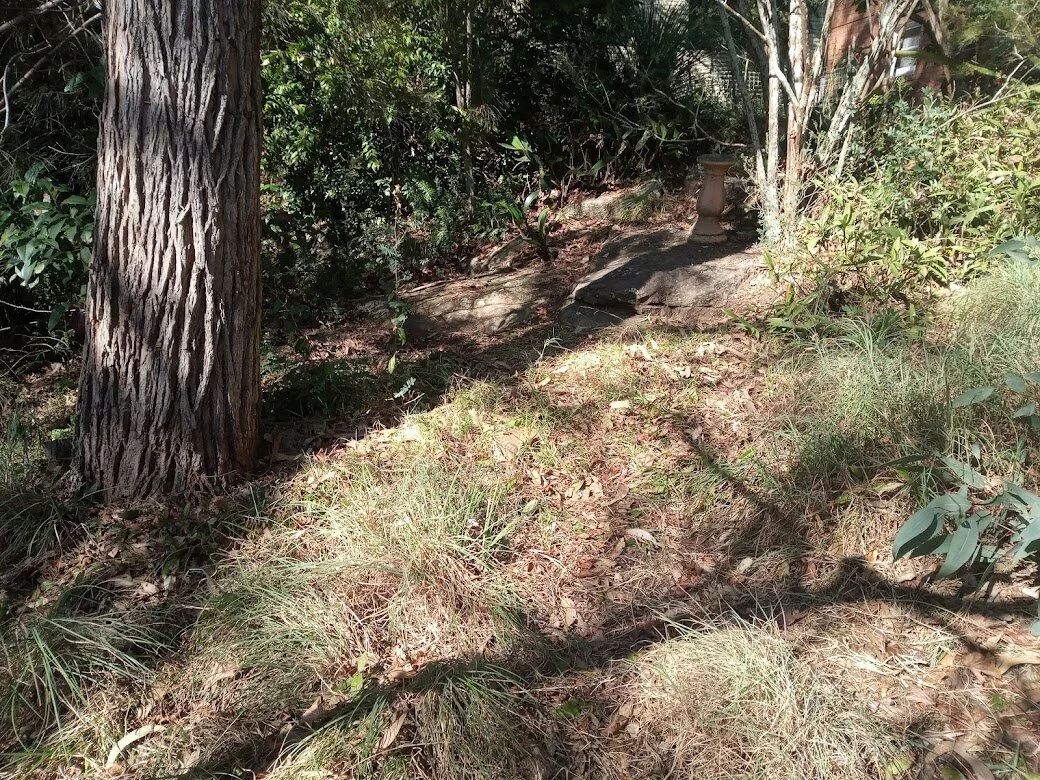
Kangaroo grass as lawn
Mulch and plants
Another option is to replace the lawn with mulch then add some low growing plants. What is best to plant will depend on where you live. Other materials such as gravel or even stones can be used instead of mulch.
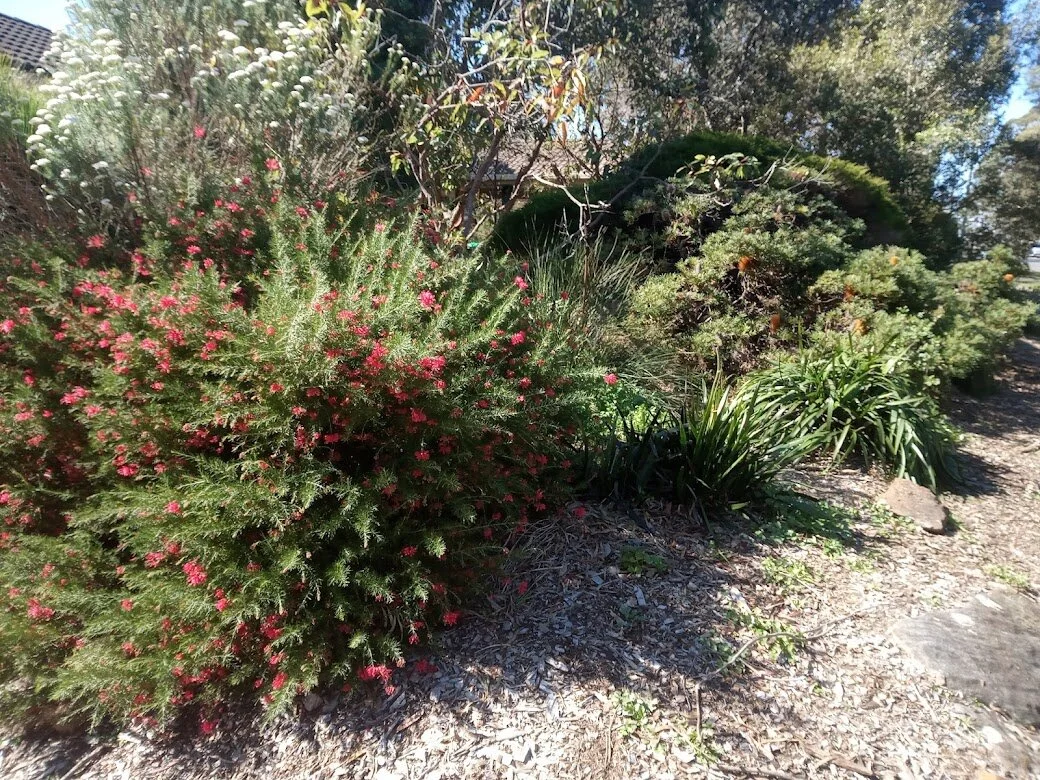
Garden with mulch and native plants
Prostrate grevilleas
Planting a whole lot of prostrate grevilleas together to form a ground cover can look effective, especially in places such as nature strips. Grevillea plants also make a perfect choice for planting on top of retaining walls or on steep banks. There are many species of grevilleas to choose from. Although they are hardy you need to choose a grevillea that suits your local climate and soil conditions.
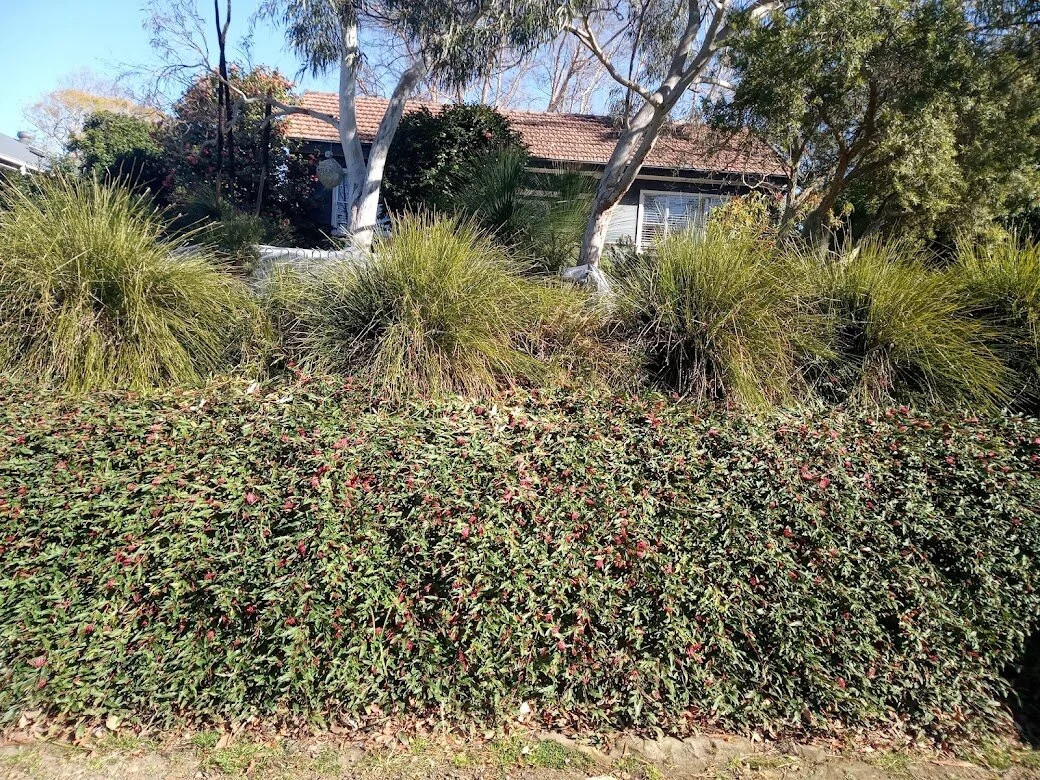
A prostrate grevillea growing along a nature strip
Vegetable and herb garden
Growing your own fresh fruit and vegetables is healthy and saves money. Gardening is also provides exercise and is a great stress relief. There are many different ways to plant a vegetable garden. You can use garden beds, raised garden beds, wall planters, timber planters, vertical gardens or pots.
There is also a growing trend of creating community gardens. There are many social benefits of these gardens. These include strengthening social connection, an improvement in mental heath and in intake of healthy food. Community gardens can help reduce negative environmental impacts by promoting sustainable agriculture, reducing food transportation costs and reducing water runoff.
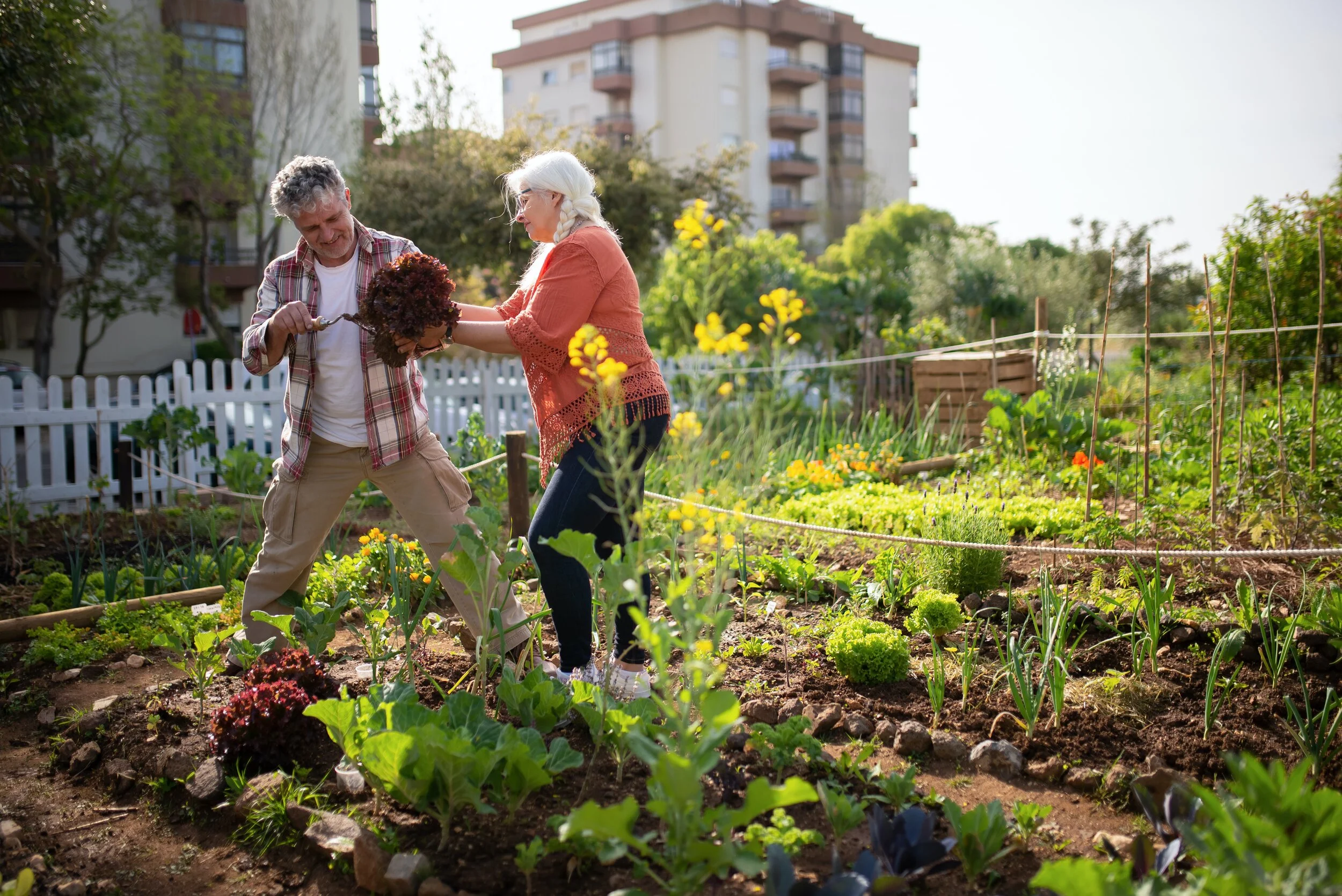
A community garden can bring people together