
The importance of Indigenous people in conservation
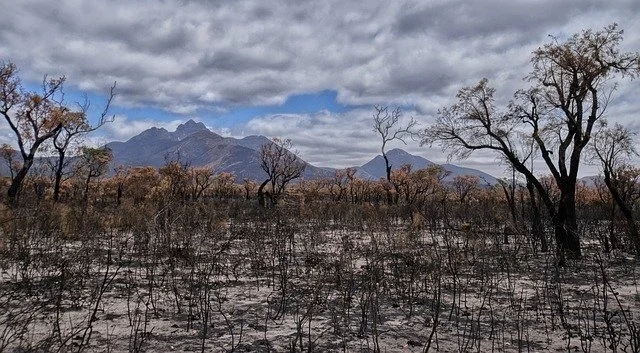
For thousands of years, Indigenous Australians managed the land. They hunted and gathered food, while carrying out land management practices such as lighting fires. This all changed with the arrival of Europeans. This caused a huge cultural and social dislocation and difficulty for Aboriginal Australians. It also proved a disaster for conservation. Problems caused included changes to fire regimes, introduction of feral species such as cats, foxes and camels and rabbits (The Nature Conservancy).
Slowly there has been a change and Indigenous Australians are becoming more involved in managing the land. There are Indigenous Ranger programs supported by various organisations. Currently there are 129 Indigenous Ranger groups across Australia (National Indigenous Australians Agency).
Three out the six federally run Australian National parks are owned by Aboriginal people and leased to the Director of National Parks (DNP). These are Uluṟu-Kata Tjuṯa, Kakadu and Booderee National Parks (Parks Australia). In Western Australia, as of November 1, 2020, over 40 parks and reserves, totalling more than 4.86 million hectares, are being jointly managed by traditional owners and the Department of Biodiversity, Conservation and Attractions.
In the Northern Territory the jointly managed parks include Garig Gunak Barlu National Park (Cobourg Marine Park), Nitmiluk National Park, Tnorala (Gosse Bluff) Conservation Reserve, Barranyi (North Island) National Park and Djukbinj National Park.
In South Australia co-management is a partnership between the state government and Aboriginal groups to help manage the national parks which combines traditional knowledge with contemporary park management. In 2004 legislation was amended to include shared responsibility for the management of national parks and conservation parks with Aboriginal groups, through the creation of either a co-management board or a co-management advisory committee. A co-management board replaces the Director of National Parks and Wildlife as the management authority for a park. There are currently nine co-management boards (Department of Environment and Water, South Australia).
In Queensland, the Cape York Peninsula Resolution Program returns ownership and management of identified lands on Cape York Peninsula to local Aboriginal Traditional Owners, while ensuring the protection of Cape York Peninsula’s iconic natural areas and significant natural and cultural values. Through this program, the state is changing the tenure of identified Cape York properties to Aboriginal freehold land, allowing Traditional Owners to return to live on country and pursue employment and business opportunities in land management, grazing and private tourism ventures. This includes the establishment of 25 Aboriginal land holding entities, holding over 3.7 million hectares of land (Department of Environment and Science, Queensland).
New South Wales currently has a joint management program in place for eight national parks which include Arakwal National Park, Gaagal Wanggaan (South Beach) National Park, Kinchega National Park, Kosciuszko National Park, Tumut Brungle Gundagai Area, Mungo National Park, Mutawintji National Park, Paroo Darling National Park and Pilliga Nature Reserve.
Parks Victoria’s Managing Country Together Framework is a blueprint that guides how they work in partnership with Traditional Owners to protect Victoria’s cultural landscapes. It outlines how they recognise and support Traditional Owner rights and interests through park management (Parks Victoria). Joint management arrangements are currently in place with four Traditional Owner groups across Victoria, with others under negotiation (Parks Victoria).
The ACT has the The Murumbung Rangers program which are a collective of Aboriginal and Torres Strait Islander people working for the ACT Parks and Conservation Service (PCS) and the operational arm of Murumbung Yurung Murra. The Murumbung Rangers deliver an innovative program of ranger guided activities, events and on-ground cultural heritage and environmental projects in partnership with and endorsement of local Traditional Custodians. Tasmania currently has no formal arrangements in place for any national parks. However, it does have a few Indigenous protected areas are areas of land and sea managed by Indigenous groups as protected areas for biodiversity conservation through voluntary agreements with the Australian Government (Department of Agriculture, Water and the Environment).
There are many benefits of Indigenous people becoming involved in conservation. Cultural burning is one main benefit. Cultural burning is the Indigenous people's practice of using low-intensity or "cool" fires to manage the landscape. It removes the fine fuels on the forest floor, such as fallen leaves and twigs, or consumes dry grass to promote new, green growth.
In much of northern Australia, this traditional practice has never stopped (ABC News). The tropical savannas of northern Australia are among the most fire-prone regions in the world. On average, they account for 70% of the area affected by fire each year in Australia. However effective fire management over the past 20 years has reduced the annual average area burned – an area larger than Tasmania. The success in northern Australia is the result of fire management from Indigenous community-based ranger groups, which has led to one of the most significant greenhouse gas emissions reduction practices in Australia (The Conservation).
Cultural burning was also used in Tasmania to rid the Preminghana Indigenous Protected area of gorse. Gorse is a prickly, perennial weed that spreads rapidly, turns soil acidic, and provides ample tinder for bushfires. It was eradicated by hacking paths through the overgrowth and spraying the weed. After years of hard work, the gorse was small enough to use cultural burning. After completing a slow, cold burn, both native grasses and gorse sprouts emerged from the ashes. However, the native grasses outcompeted the gorse so it couldn’t photosynthesise (ABC News).
Another benefit is that Indigenous Traditional Owners have a more holistic approach to conservation. They care about more than threatened species alone – care is about the whole Country. Indigenous people are concerned about species or places that are not on the national list of threatened species and ecological communities, and in many cases, these features of concern were not receiving adequate attention. A successful threatened species project will integrate broader objectives than threatened species, including cultural values, and will personally benefit the people and community involved (Threatened Species Recovery Hub, Submission 159).
Indigenous people themselves receive benefits from threatened species, including a sense of purpose, work, feeling alive and strong, feeling healthy, learning about country and animals, learning new technical skills and training, teaching the younger generation, the opportunity to spend time on country (Threatened Species Recovery Hub, Submission 159).
There is still a long way to go however. In southern Australia, however, European settlement severely disrupted traditional Indigenous life. Some colonists, fearful of fire, saw cultural burning as an act of resistance. The removal of fire from the landscape soon had sever effects. The Black Thursday Bushfires in February 1851 burnt 5 million hectares of Victoria (ABC News).
More recently, in the 2019/2020 Bushfire Crisis, more than 12.6 million hectares across Australia have been burned. In New South Wales alone more than 5.4 million hectares were burnt (ABC News).
Perhaps in southern Australia using practices such as cultural burning is more difficult. While there are many Indigenous living in southern Australia, traditional practices have not been retained to the extent they have in northern Australia, especially around the cities such as Melbourne and Sydney.
The benefits of getting Indigenous people involved in conservation do seem to be recognised as more of them are being employed in conservation and traditional practices adopted in land management. However, it would be great to see more national parks that are fully run by Indigenous people.